Vérification du dispositif de paiement
Voyez où les acheteurs de vos marchés abandonnent avant de payer
Un paiement refusé ou un moyen de paiement manquant coûte une commande que votre marketing a déjà payée. Saisissez l'adresse de votre boutique : la vérification compare votre checkout à ce qu'attendent les acheteurs de chacun de vos marchés et nomme les écarts. Si vous le souhaitez, elle calcule ensuite ce que ces écarts vous coûtent en euros.
Gratuit, sans adresse e-mail, résultat immédiat à l'écran.
Versuni (Philips Home Appliances) : une réduction récurrente des coûts PSP de plus de 30 %. Lire le cas

Dans beaucoup d'organisations, le paiement reçoit plus d'attention que jamais. On discute en permanence de nouveaux prestataires, de nouvelles technologies et de façons toujours plus fines d'optimiser la performance au moment du paiement. Des notions comme le routage, l'orchestration et le gain d'acceptation font désormais partie des conversations quotidiennes.
Tout cela est légitime. Mais pour beaucoup de marques et de retailers, cela soulève une question plus fondamentale : regardons-nous la bonne partie du tunnel ?
Car en pratique, les plus grands gains commerciaux ne se trouvent pas dans le paiement. Ils se trouvent avant, avant même que le paiement n'ait lieu.
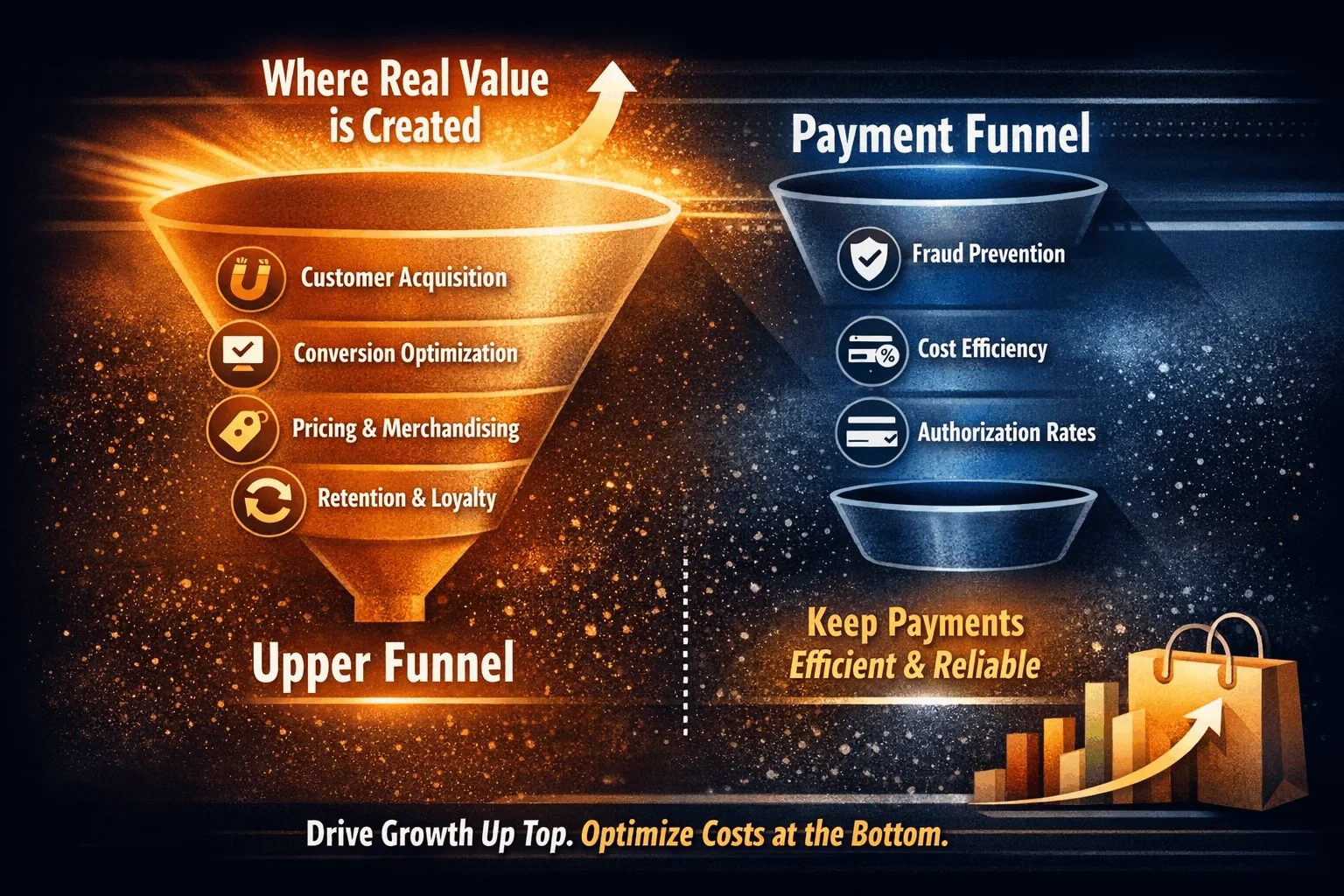
Le haut et le bas du tunnel
La création de valeur vient d'abord de l'efficacité de l'acquisition client, de l'optimisation de la conversion tout au long du parcours d'achat, du prix et du merchandising, et de la fidélisation. Des améliorations dans ces domaines peuvent produire une croissance à deux chiffres. Le paiement, lui, opère dans une plage d'impact bien plus étroite. Il influence les taux d'acceptation, le niveau de fraude et le coût par transaction. Ce sont des points d'action importants, mais ils déplacent rarement l'aiguille autant que les améliorations en amont.
Cette distinction est essentielle. Le paiement se situe en bas du tunnel. C'est la dernière étape d'une chaîne de valeur bien plus large, et son rôle est fondamentalement de soutien. Il doit fonctionner, il doit être fiable, et il doit être économiquement efficace. Au-delà, les gains supplémentaires s'amenuisent vite.
Support ne veut pas dire hors de contrôle. Le paiement est un poste de coût qui court sur chaque transaction gagnée ailleurs, et donc l'un des rares endroits où récupérer de la marge sans rien vendre de plus. C'est exactement le travail d'EcomStream.
La banalisation des PSP
Le marché entretient l'idée que l'optimisation des paiements peut augmenter sensiblement la conversion. En pratique, l'effet est souvent modeste, et beaucoup de PSP proposent exactement la même chose. Améliorer les taux d'autorisation ou la logique de retry apporte un gain réel, mais il se compte en points de base plutôt qu'en points de pourcentage. Comparé à ce qu'apportent une meilleure UX, une stratégie tarifaire plus solide ou un meilleur ciblage, la contribution relative du paiement apparaît clairement.
Cela ne veut pas dire que le paiement est secondaire. Au contraire, il est critique. Sa valeur tient simplement moins à la création de croissance qu'à sa protection. Quand le paiement échoue, le chiffre d'affaires est perdu immédiatement. Quand il est inefficace, la marge s'érode silencieusement avec le temps. C'est là que doit porter l'attention : efficacité des coûts et stabilité opérationnelle.
L'optimisation des coûts PSP a un effet direct et mesurable sur le résultat. Réduire les marges acquéreur, améliorer les conditions de change ou supprimer les inefficacités de structures tarifaires qui semblaient transparentes produit des économies significatives. Pour beaucoup de marchands, cela représente une baisse à deux chiffres en pourcentage des coûts PSP, souvent sans aucun changement pour le client. Cette combinaison de risque faible et d'impact élevé est rare.
En parallèle, la stabilité au bas du tunnel n'est pas négociable. Une panne, une transaction qui échoue ou un mécanisme de repli insuffisant se traduisent directement par des ventes perdues. Un client qui rencontre de la friction à la dernière étape du paiement revient rarement. Garantir une disponibilité élevée, une performance constante et un tunnel fluide vaut donc bien plus que d'ajouter des couches de complexité pour des gains marginaux.
C'est précisément là que les organisations risquent de surinvestir sans le vouloir. Plus un dispositif de paiement devient sophistiqué, plus il exige de ressources internes, de gestion des prestataires et de surveillance continue. Cela peut produire des améliorations progressives, mais cela consomme aussi du temps et de l'attention qui vaudraient davantage ailleurs. Chaque heure passée à affiner la logique de paiement est une heure qui manque au parcours client et à la croissance.
Se concentrer sur la vente
Les marques et les retailers les plus efficaces procèdent autrement. Leur objectif n'est pas le dispositif le plus avancé, mais un paiement fiable, efficace et évolutif, qui ne gêne pas la vente. Ils visent un niveau de performance compétitif sur le marché, sans introduire de complexité inutile.
Les capacités des prestataires modernes confortent cette approche. Les principaux PSP offrent déjà une forte performance d'autorisation, des mécanismes d'optimisation intégrés et une couverture mondiale. Pour la plupart des retailers, cela suffit largement. Vouloir aller au-delà donne souvent des rendements décroissants.
Dans le même temps, le paysage européen des paiements évolue. Les paiements instantanés, les nouvelles initiatives de wallet et les travaux sur l'identité numérique créent de nouvelles possibilités et de nouveaux rails de paiement. Ces innovations pèseront de plus en plus dans les années à venir, en particulier sur la baisse des coûts et sur l'expérience utilisateur.
Elles ne changent pourtant rien au rôle du paiement dans l'entreprise. Elles élargissent la boîte à outils, elles ne déplacent pas la priorité. Leur adoption doit donc suivre un bénéfice commercial clair et une demande des clients, plutôt qu'une envie de construire une architecture plus complexe ou plus moderne.
Les entreprises qui gèrent bien cet équilibre partagent un même état d'esprit. Elles n'ignorent pas le paiement, elles le gardent à sa juste place. Elles optimisent sur le plan commercial plutôt que technique. Elles s'assurent que les coûts sont compétitifs, que la performance est stable et que le tunnel est fluide. Au-delà, elles affectent leurs ressources là où l'effet sur la croissance est plus grand.
Elles conservent aussi une marge de souplesse, sans sur-concevoir leur dispositif. Elles évitent les verrouillages contractuels inutiles, restent informées des évolutions du marché et gardent la capacité de s'adapter quand il le faut. En même temps, elles résistent à la tentation de construire pour des scénarios qui ne se produiront peut-être jamais.
En résumé
Tout se ramène à une question de priorités. L'acquisition, la conversion et la fidélisation sont les vrais moteurs de la croissance et méritent l'essentiel de l'attention et des investissements. Le paiement, bien que critique, se pilote avec un autre objectif : efficacité, fiabilité et maîtrise des coûts.
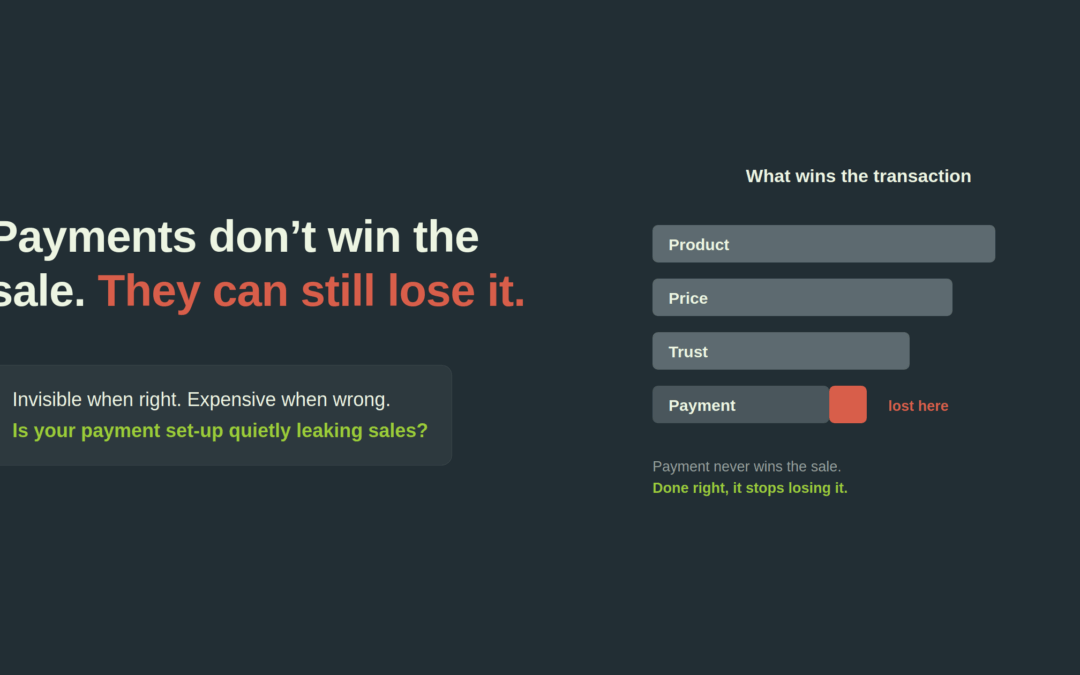
Le paiement est indispensable pour conclure la transaction, mais ce n'est pas là que la transaction se gagne. Cela se joue plus tôt, dans les moments où le client découvre, évalue et décide d'acheter.
Pour la plupart des marques et des retailers, la stratégie gagnante n'est pas le contrôle maximal du paiement. C'est un maximum d'attention portée à la croissance, avec un dispositif de paiement qui fait simplement bien son travail.
Car au bout du compte, on ne gagne pas avec l'infrastructure de paiement la plus avancée. On gagne en vendant plus, et plus efficacement.