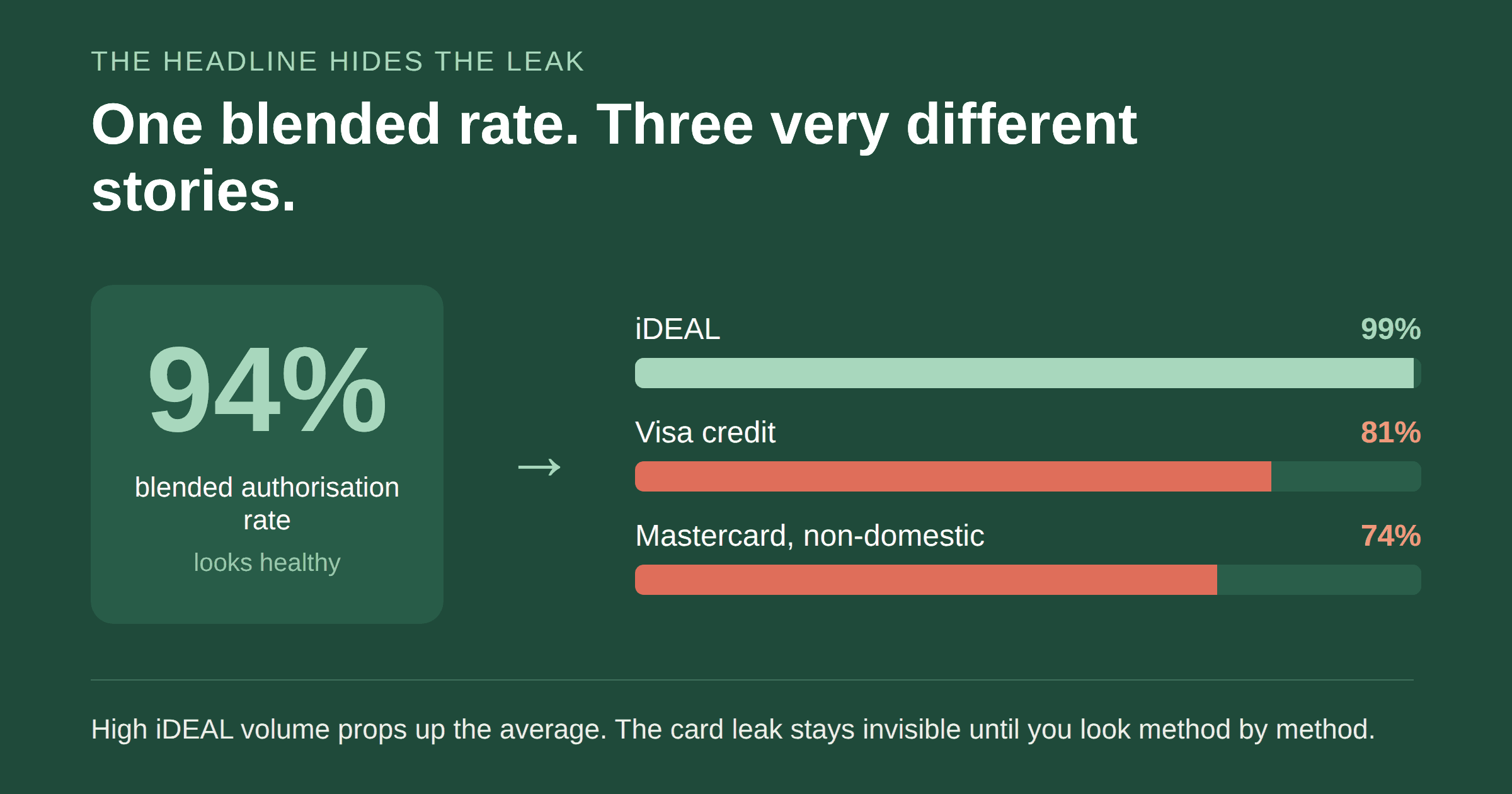
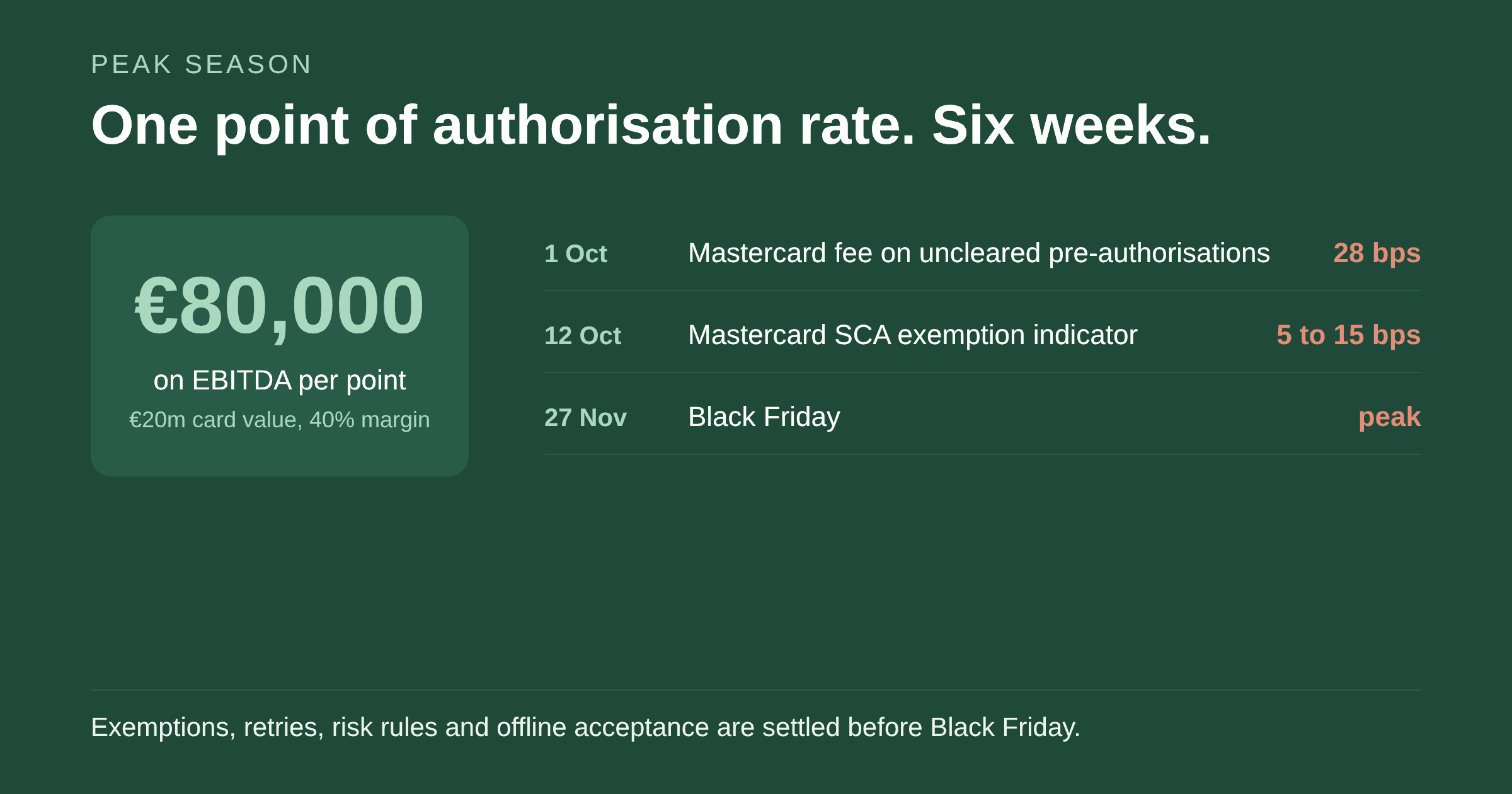
Authorisation rate in peak season: what to settle before Black Friday Peak puts the most card value of the year through a payment set-up that stays frozen while it runs. What is not settled before Black Friday is measured until January. For retail and ecommerce, peak...
01
Analysis on payment costs, performance and regulation
iDEAL fees: what you pay per transaction with every provider
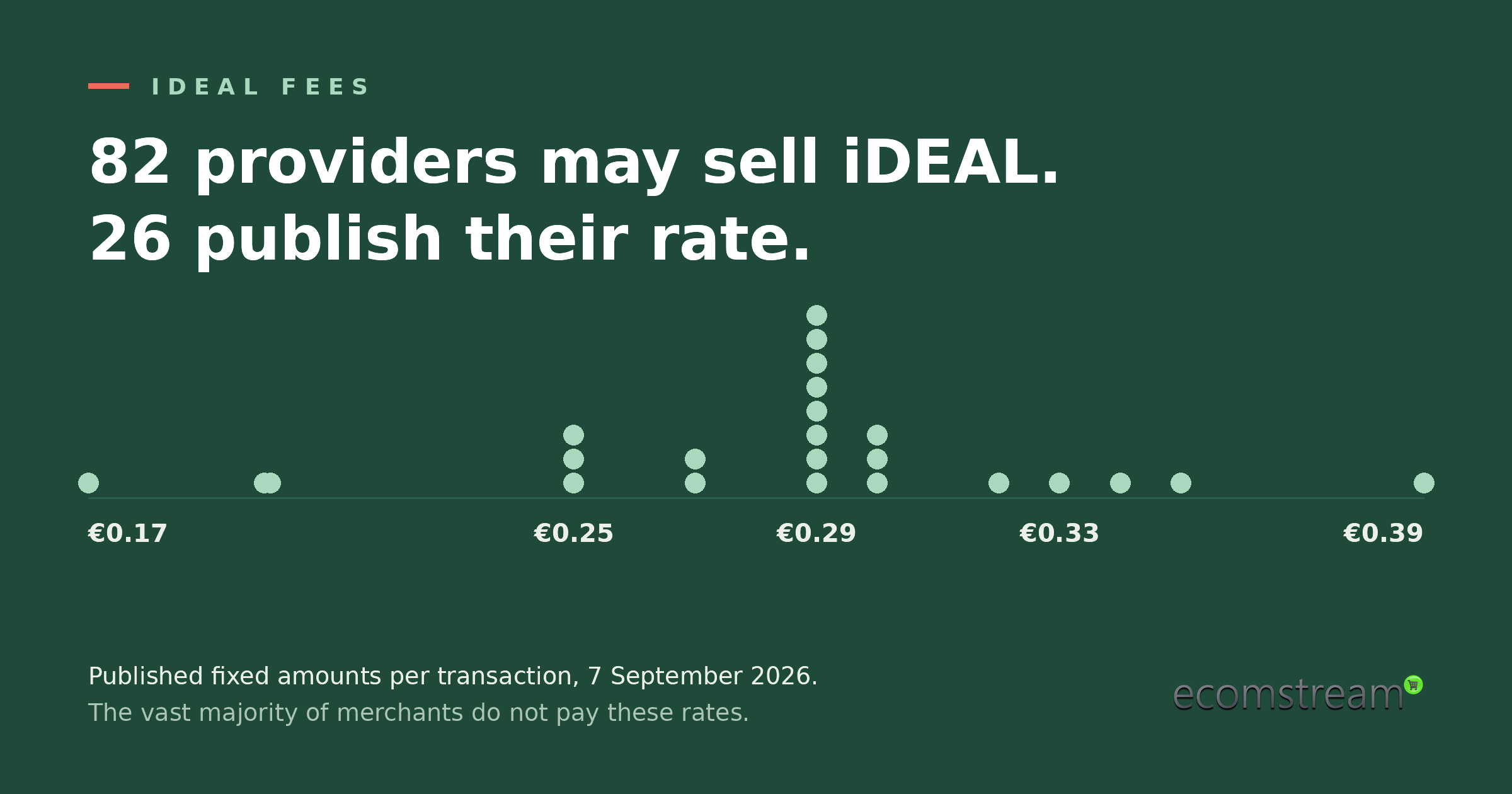
iDEAL fees: what you pay per transaction with every provider The fixed amounts providers publish run from 17 to 39 cents per transaction, two of them charge a percentage instead, and some add a monthly fee on top while others do not. If you are looking for the cost of...
Rising scheme fees are eating your margin. Who is actually checking them?
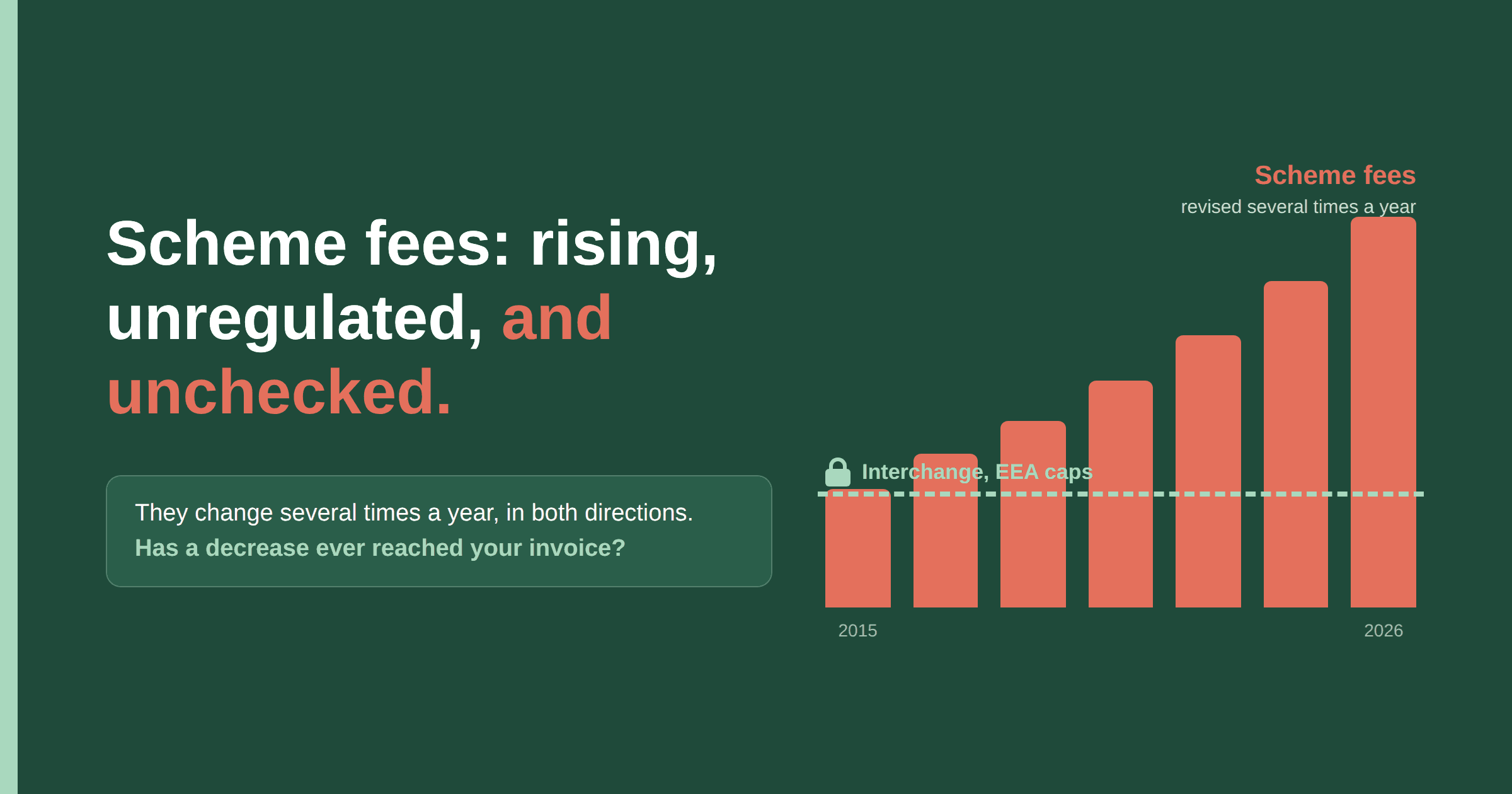
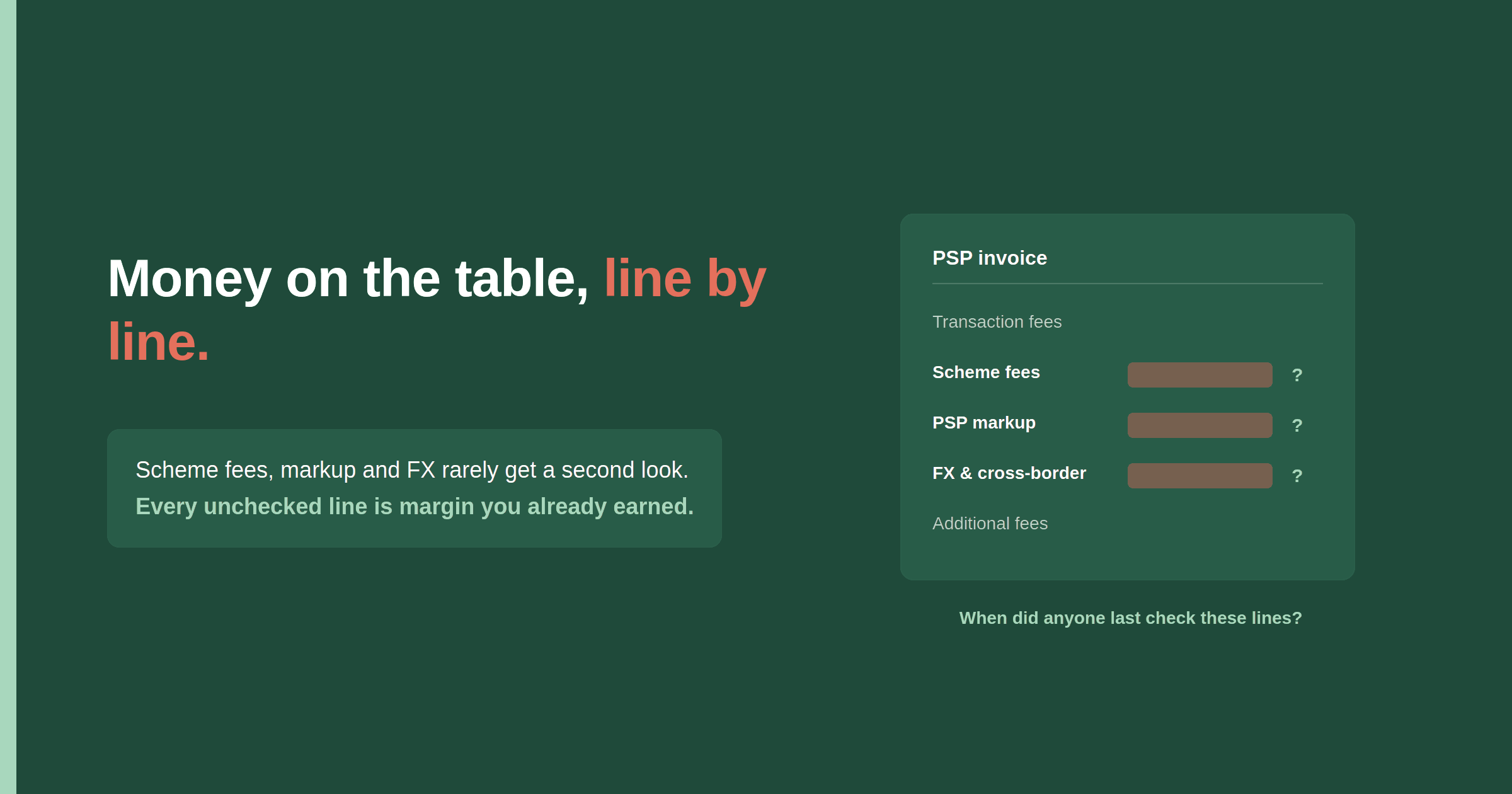
Rising scheme fees are eating your margin. Who is actually checking them? Interchange got the caps and the headlines. Scheme fees got neither, and they have been climbing quietly ever since. Ask a merchant what a card transaction costs and you will hear about...
What your PSP won’t tell you about interchange (and why an independent eye finds it)
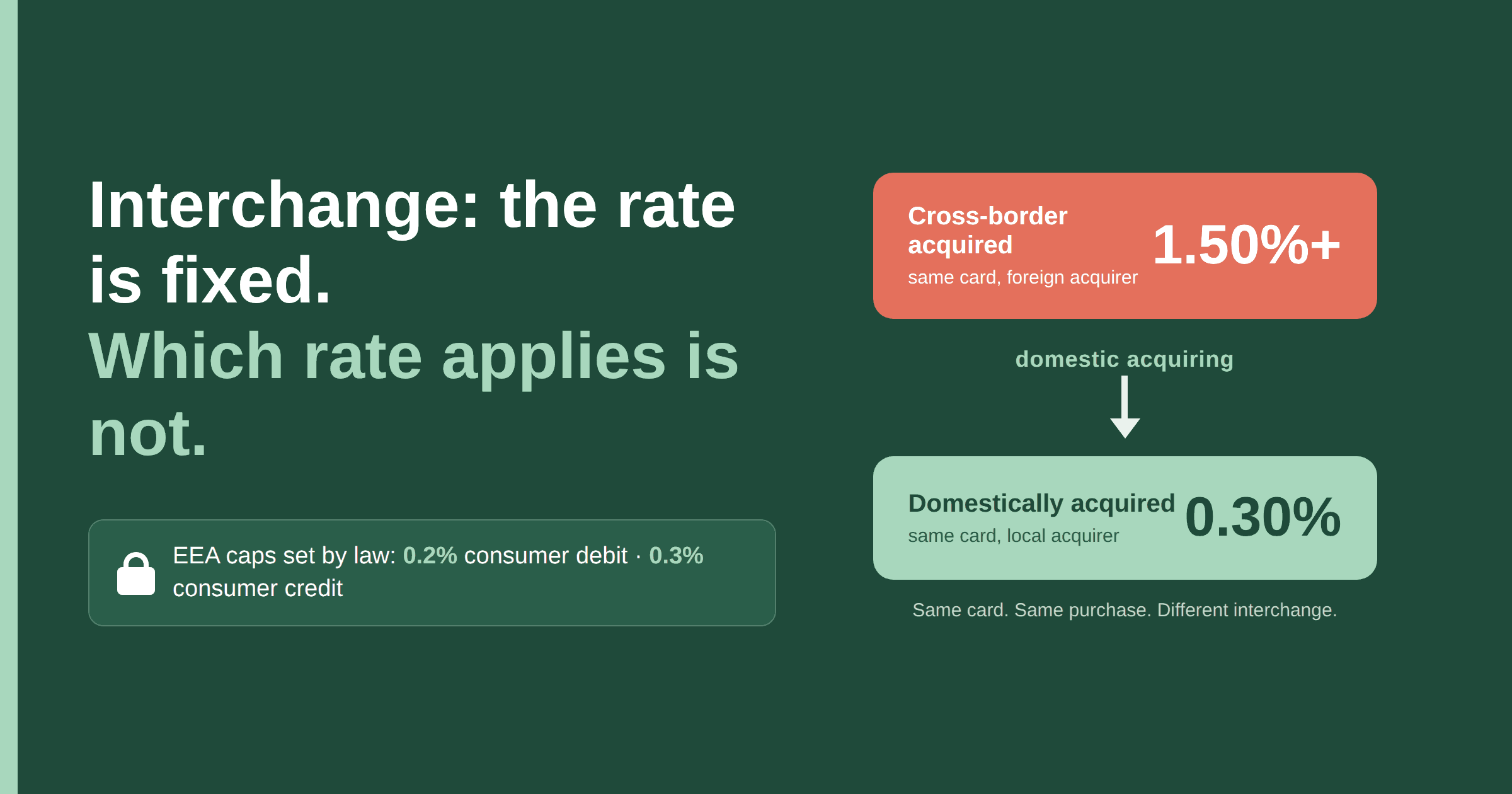
What your PSP won’t tell you about interchange (and why an independent eye finds it) If anyone promises to negotiate your interchange down, stop the conversation. The rate cannot be negotiated. Which rate applies to you, however, can change, and that distinction is...
PSP performance optimisation: what it means, what it costs you, and what you can actually change
PSP performance optimisation: what it means, what it costs you, and what you can actually change Your PSP tracks performance. So does your finance director. They are not looking at the same numbers. When your PSP talks about performance, they typically mean uptime,...
What your PSP costs are made of: interchange, scheme fees and margin
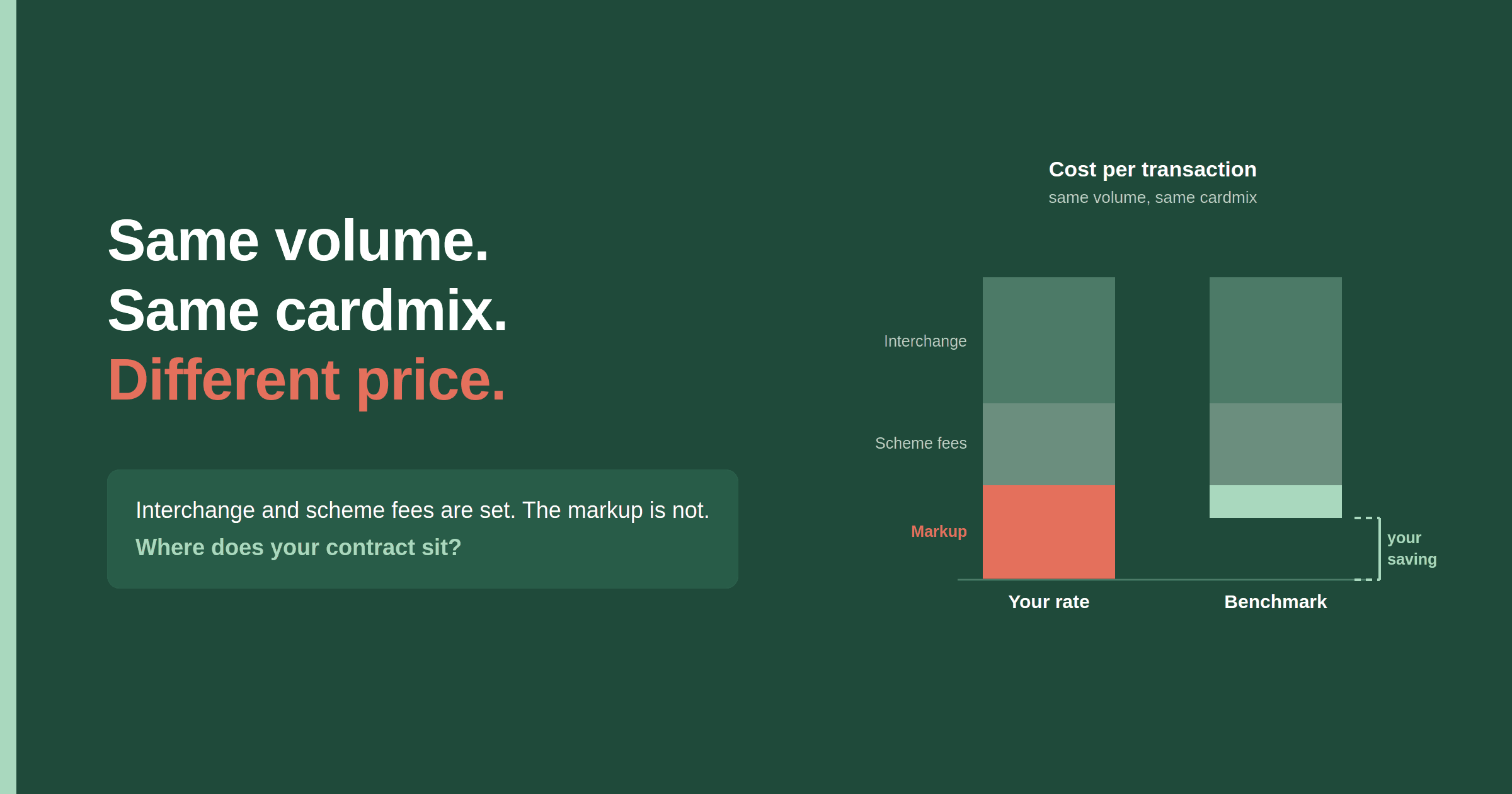
What your PSP costs are made of: interchange, scheme fees and margin Are you overpaying your PSP? Most merchants are, and most have no idea by how much. Your invoice is not a fixed cost. It is a negotiated one, and most were negotiated badly. Most merchants treat...
PSD2 and PSD3: what Dutch online retailers need to know now
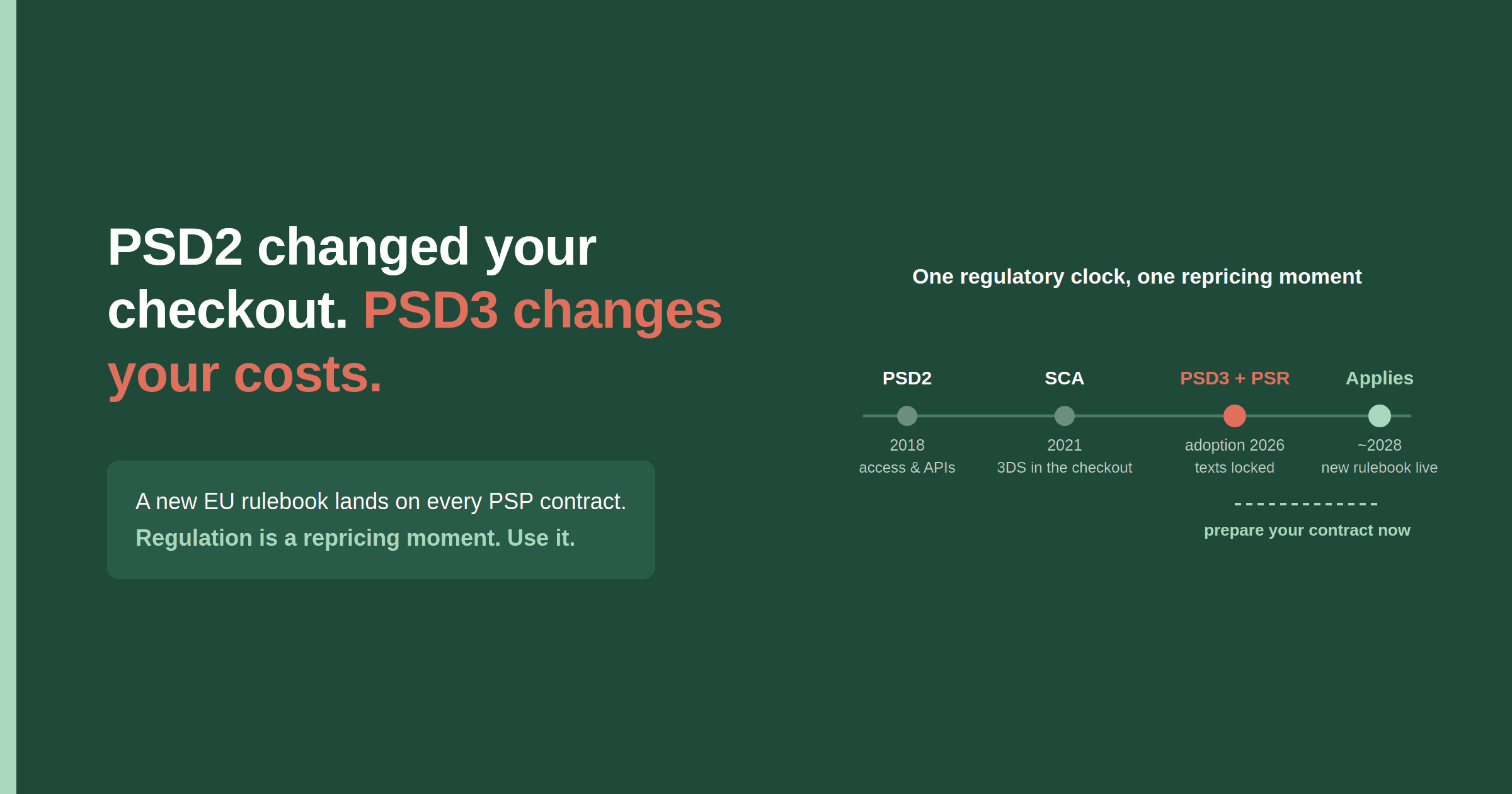
PSD2 has been the regulatory backbone of European online payments since 2019. Strong Customer Authentication, 3DS2, transaction risk analysis exemptions, by now most Dutch online retailers have absorbed the friction and adapted their checkout flows accordingly. But...
Payments are essential, but they are not where the transaction is won
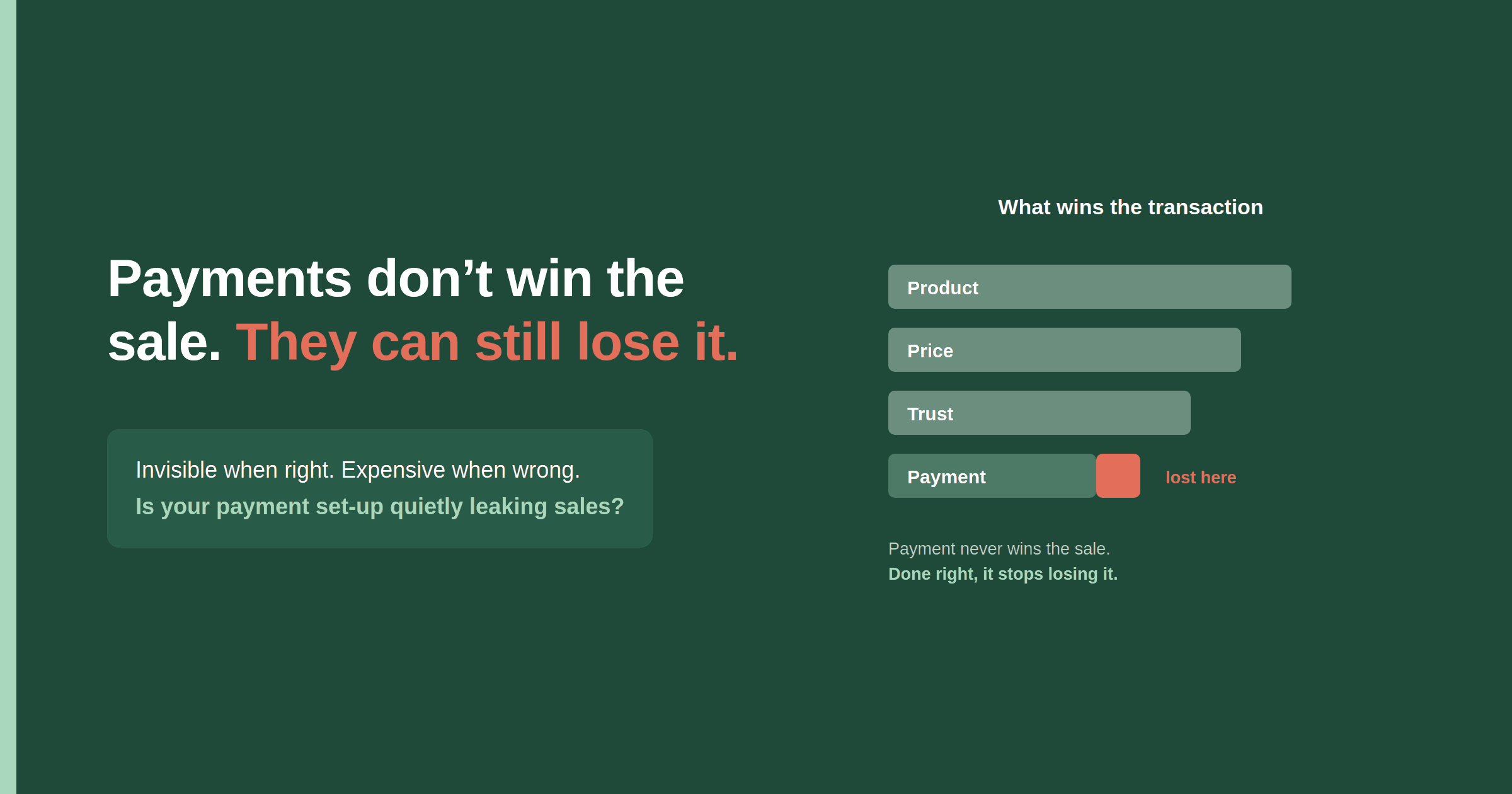
Payments are essential, but they are not where the transaction is won In many organisations, payments are receiving more attention than ever. There are ongoing discussions about new providers, new technologies, and increasingly sophisticated ways to optimise...

Unified Commerce Payment Solutions: Opportunities and Challenges
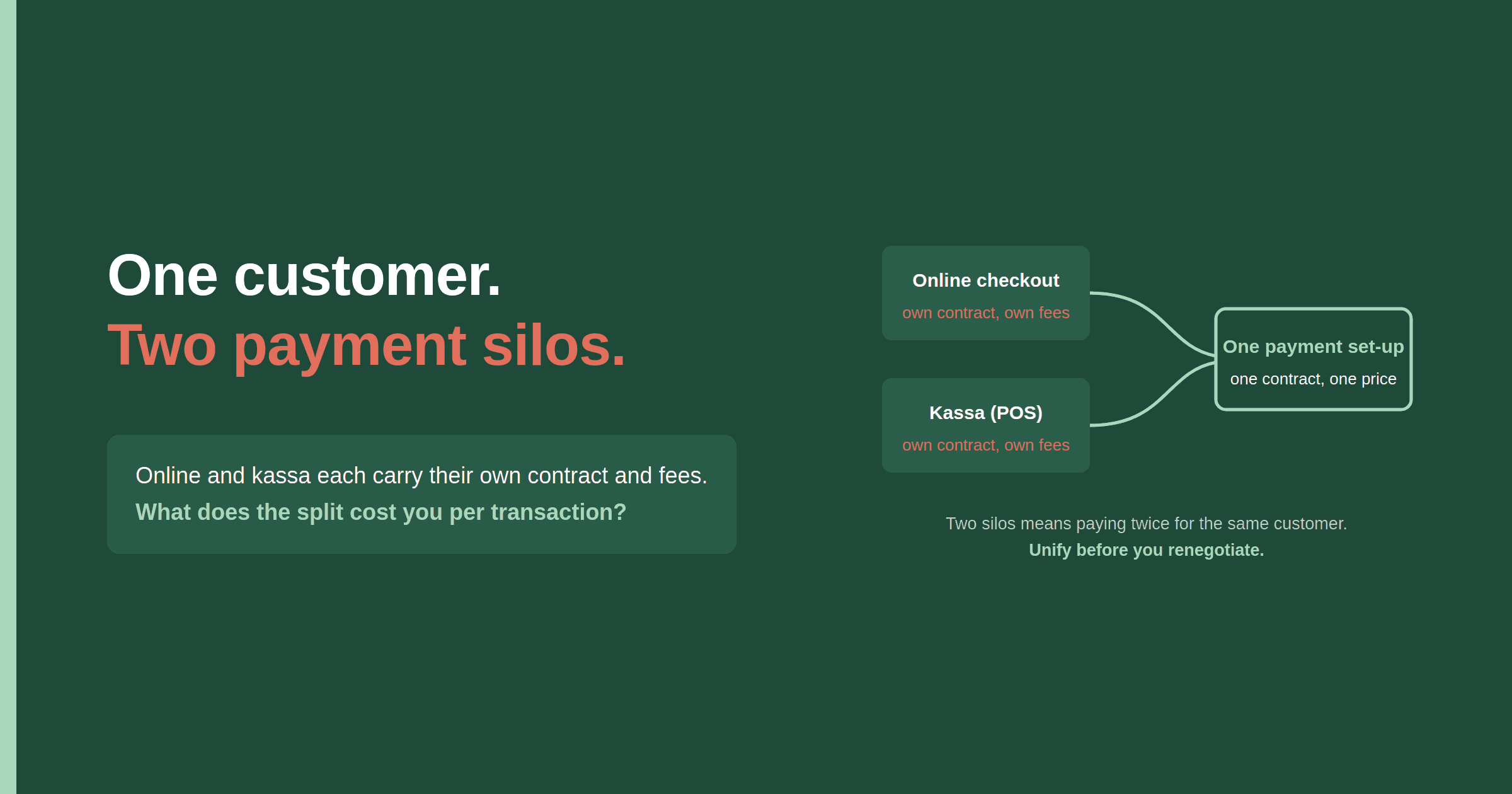
Unified Commerce Payment Solutions: Opportunities and Challenges Retailers who sell both online and in physical stores are increasingly confronting a structural problem with their payment setup: two separate worlds that do not talk to each other. Online, they have a...
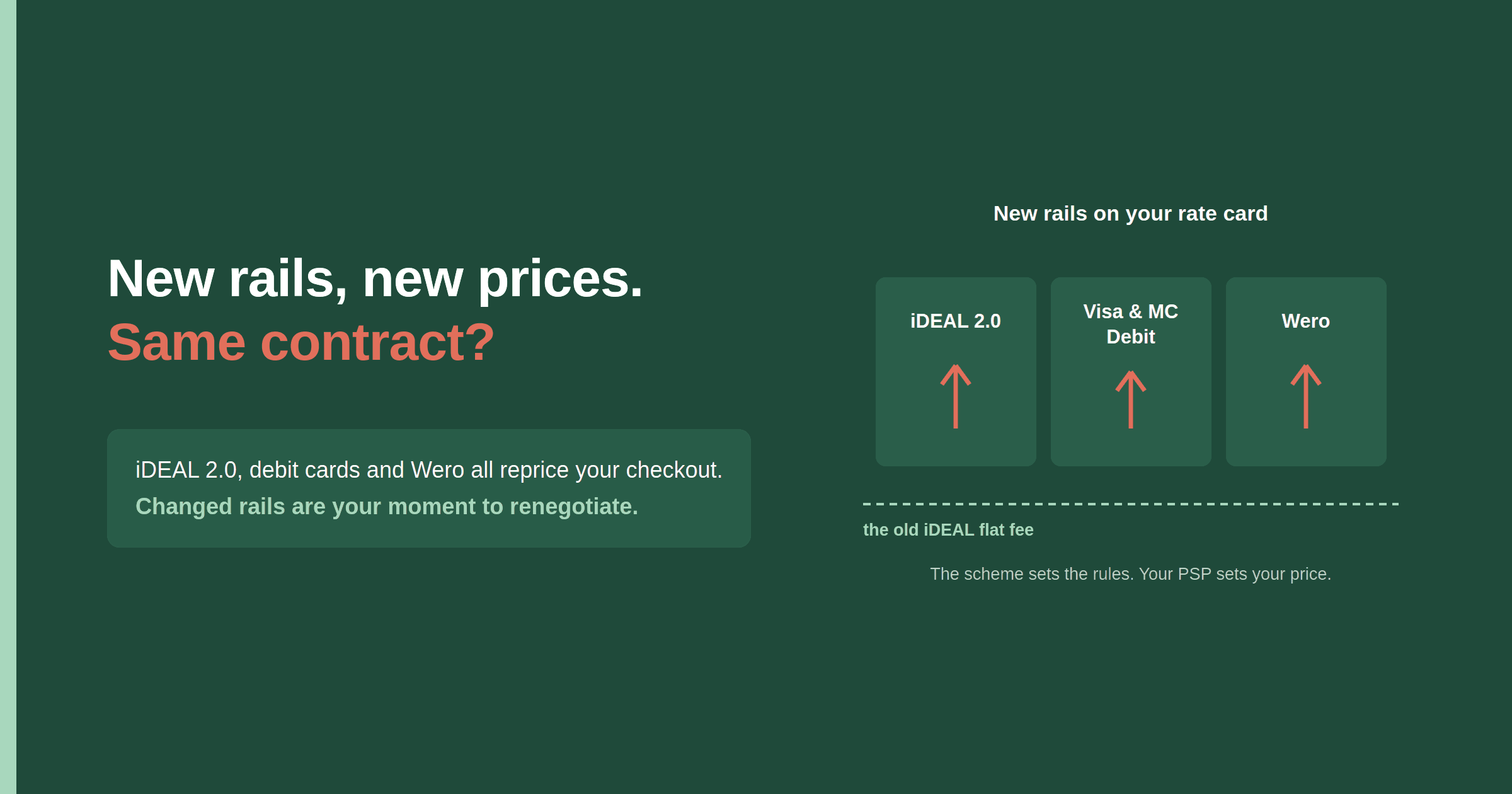
The iDEAL to Wero migration is to complete by 31 December 2027: what it costs you as a merchant
The iDEAL to Wero migration is to complete by 31 December 2027: what it costs you as a merchant The migration from iDEAL to Wero is to complete by 31 December 2027. The migration to Wero has already started, and it reaches the merchant side from October 2026. For two...

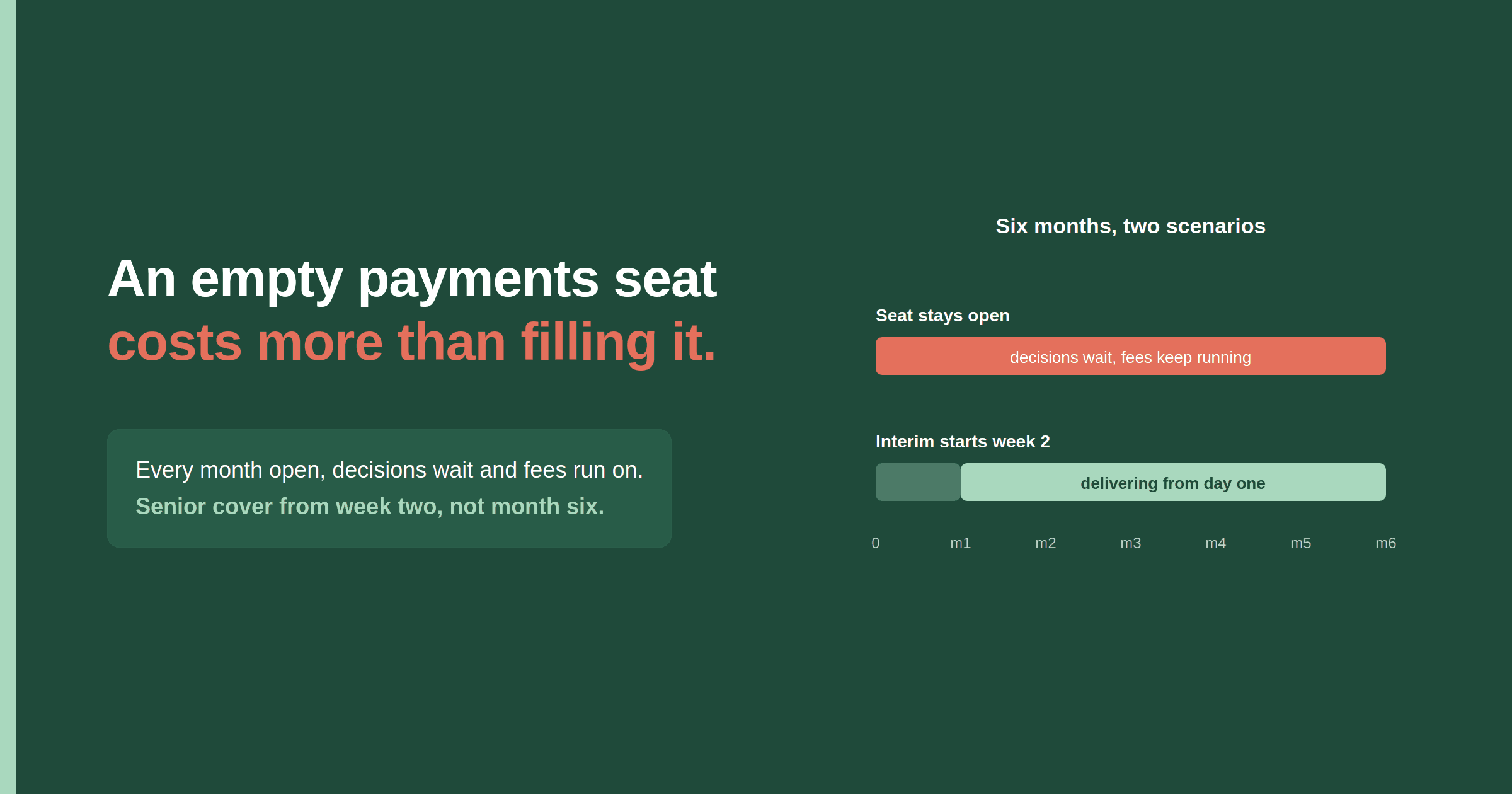
Why an interim payment specialist can be valuable for your company
Why an interim payment specialist can be valuable for your company Most retailers have a payments setup. Few have a payments strategy. The difference matters. A payments setup is what you have when a PSP was chosen at some point, a contract was signed, and the system...

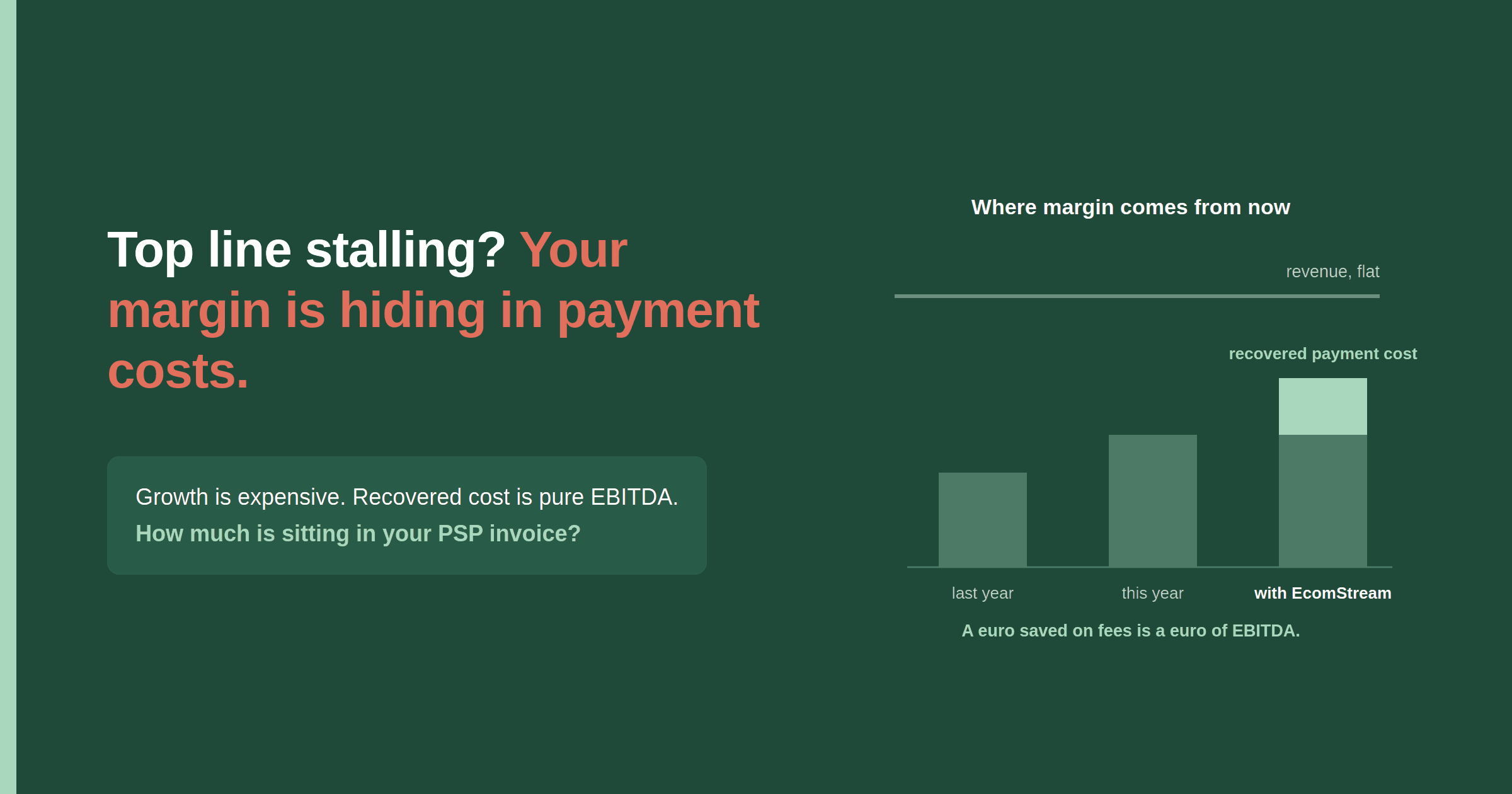
When top-line growth stalls: how Dutch retailers are finding margin in payment costs
When top-line growth stalls: how Dutch retailers are finding margin in payment costs Does your online revenue growth feel a little exhausted? You are not alone. Online sales in the Netherlands grew 24% in 2021, followed by a 5.8% decline in 2022. Since then growth has...
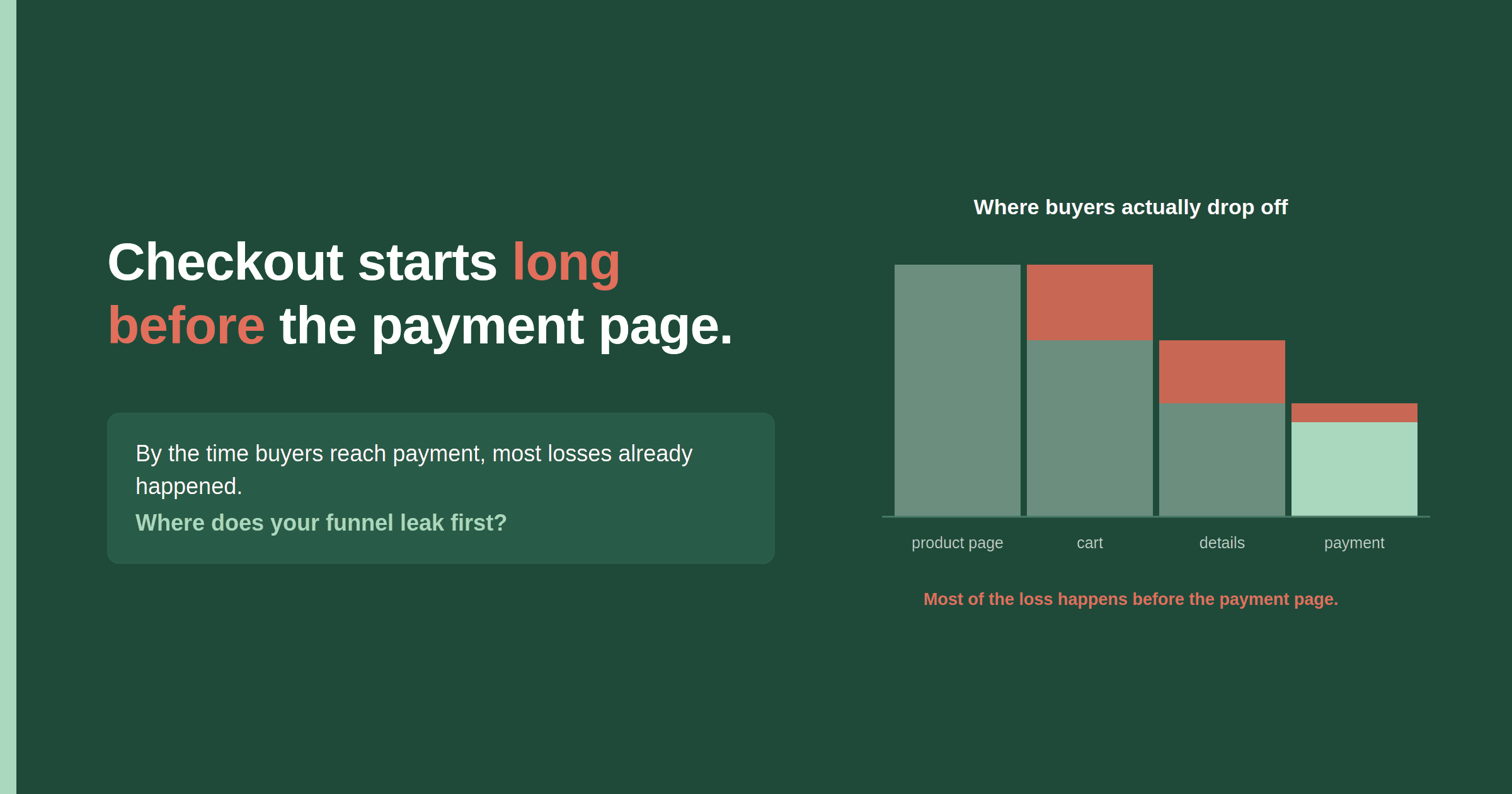
Your checkout process starts long before the payment page
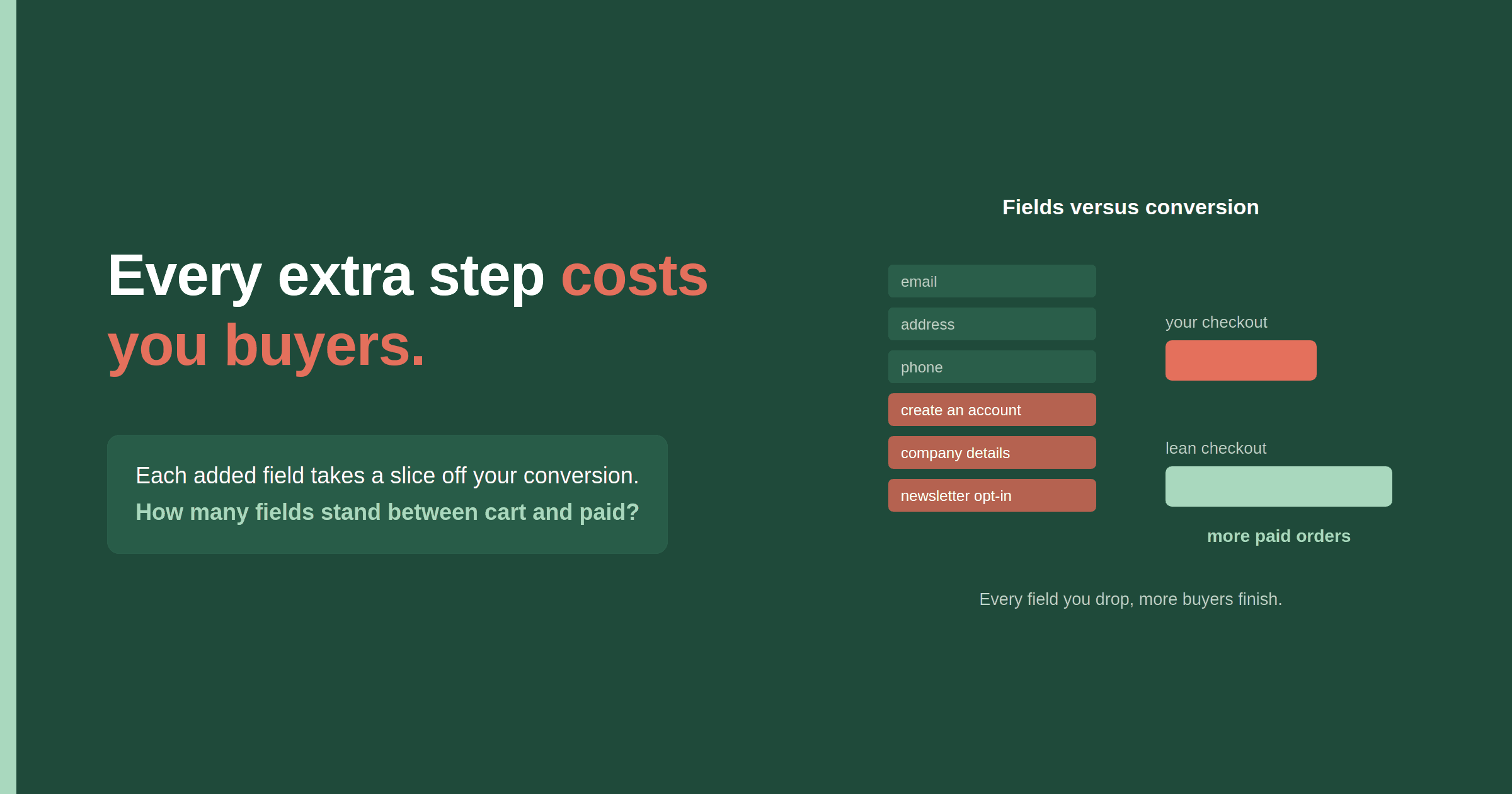
Most merchants treat checkout optimisation as a payment problem. It is not, at least not entirely. The checkout process begins the moment a customer clicks "order" in the shopping cart, and for most of that journey, your PSP has no influence whatsoever. Understanding...
Online checkout optimisation
Online checkout optimisation Every merchant knows that checkout is where conversion happens or doesn't. What fewer act on is that checkout is also where customer relationships are built or lost. Speed is the entry ticket. Everything beyond that is where the margin is...
Replatforming your e-commerce? Don’t forget the checkout
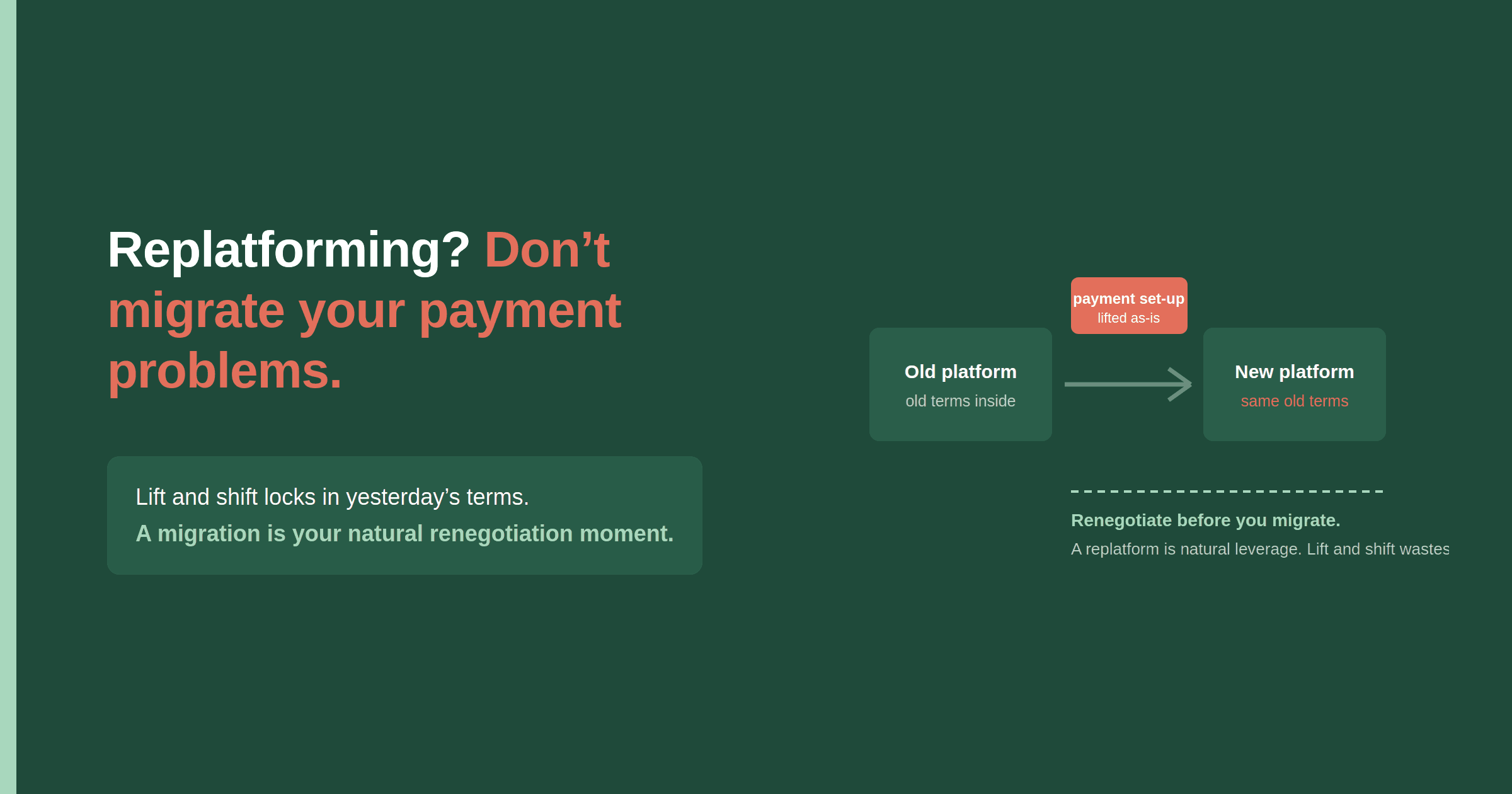
Replatforming your e-commerce? Don’t forget the checkout In an ecommerce replatforming project, the payment layer is consistently the most underweighted workstream. It is also the one where a mistake costs the most, because it sits at the exact point where you convert...
Use gamification techniques in the checkout process
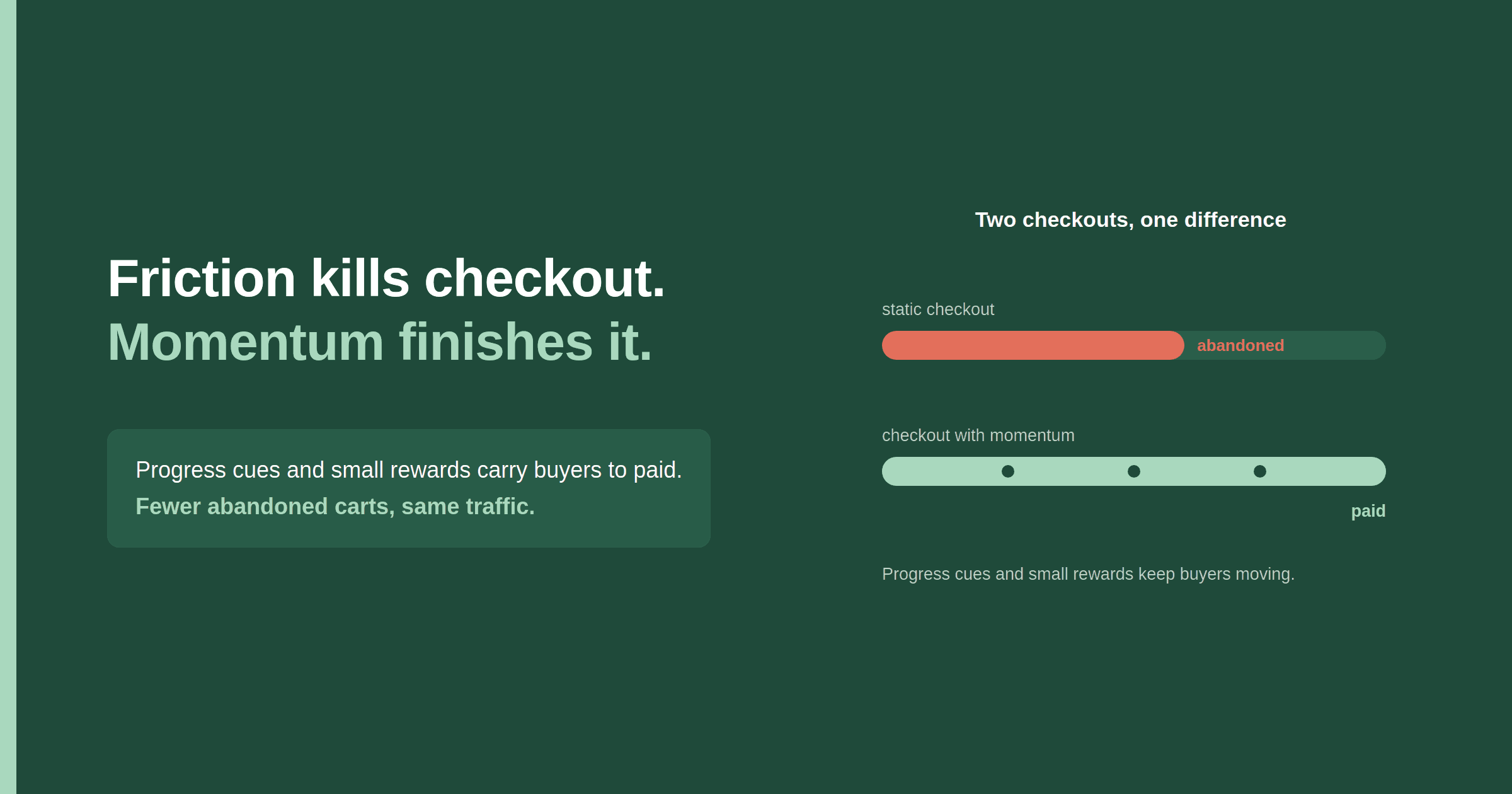
Use gamification techniques in the checkout process Roughly seven in ten carts never convert. Baymard puts the average cart abandonment rate at 70.22 percent, and that number has barely moved in two decades despite better technology, better devices and better design...
Tokenisation: the road to zero-click, secure payments
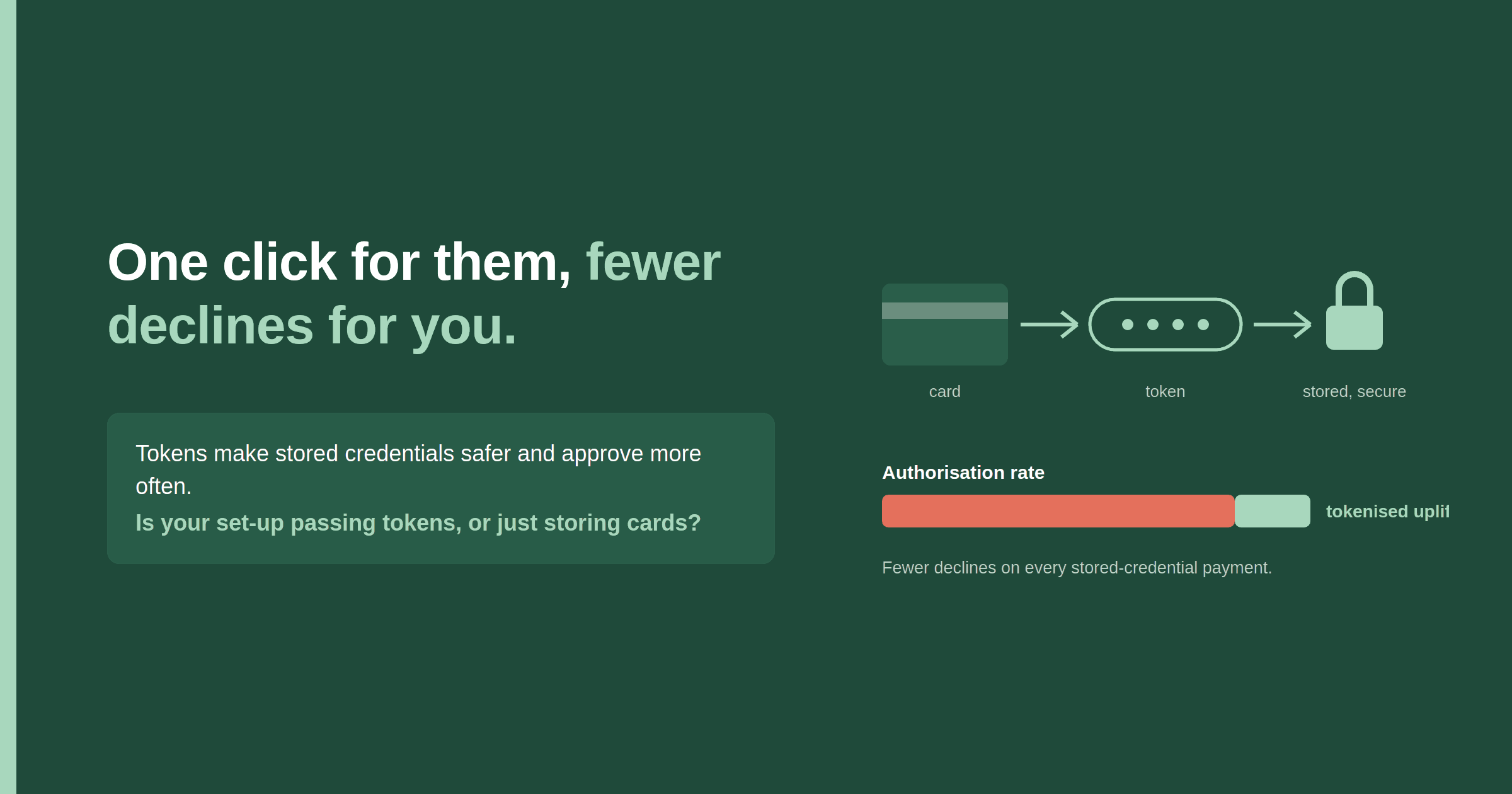
Tokenisation: the road to zero-click, secure payments Frictionless payment is no longer a differentiator. It is the baseline customers expect, and the moment a checkout asks too much, conversion leaks. Tokenisation is the mechanism that lets you remove that friction...
Contextual commerce: what it means for your payment set-up
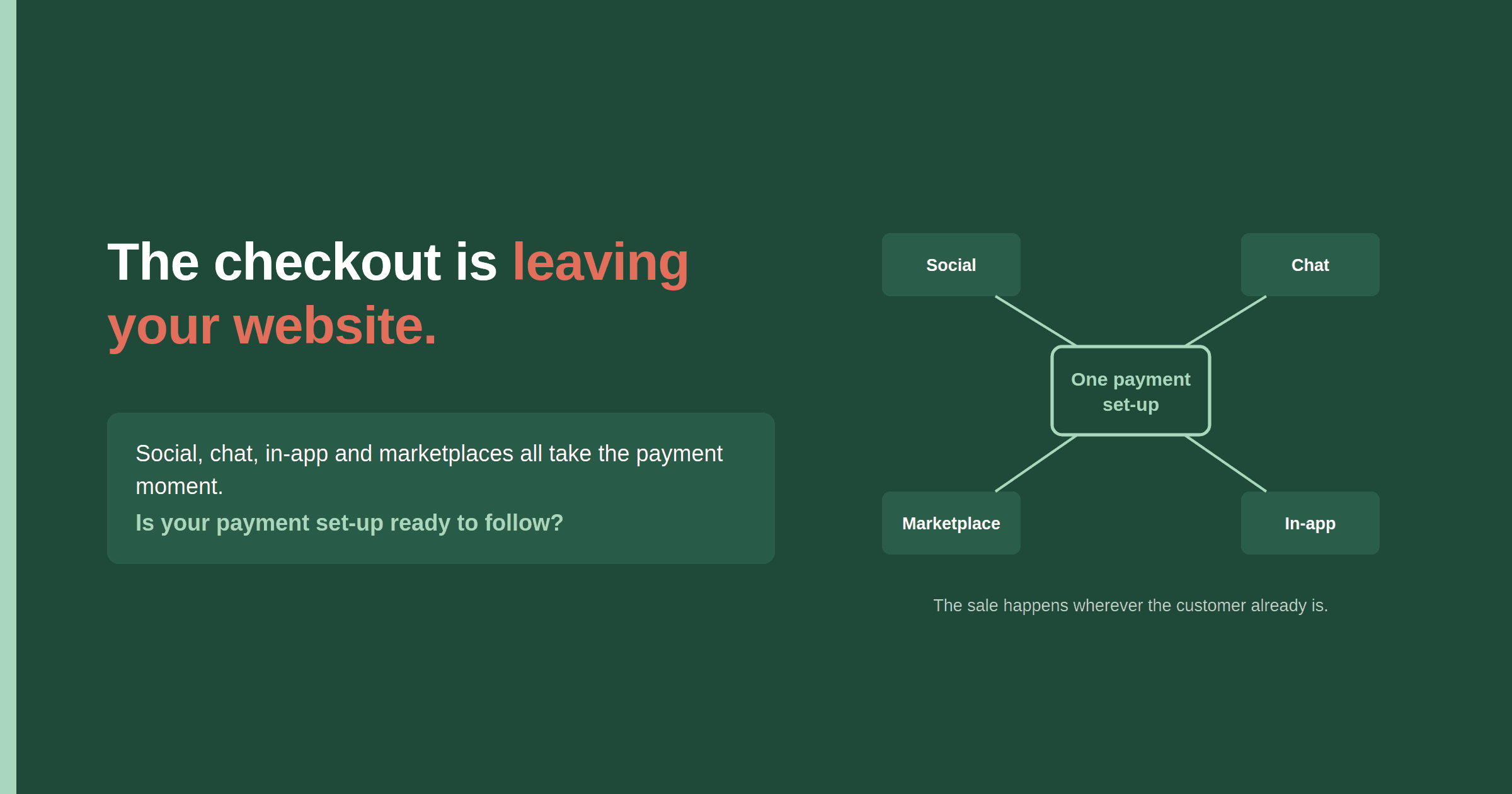
Contextual commerce: what it means for your payment set-up The traditional customer journey has a clear structure. A consumer discovers a product, visits a website, adds it to a cart, and completes a checkout. Every step is deliberate, and every step is a potential...
Are you leaving money on the table with your payment solution?
Most merchants are, and most have no idea by how much. Not because they made a bad decision, but because the payment setup that was right two years ago quietly stops being right. Volumes grow, the cardmix shifts, new methods appear at checkout, customers move to...
02