
Most retailers have a payments setup. Few have a payments strategy.
The difference matters. A payments setup is what you have when a PSP was chosen at some point, a contract was signed, and the system has been running since. A payments strategy is what you have when someone with deep knowledge has actively reviewed the setup, benchmarked the costs, assessed the performance, and made deliberate decisions about what to keep, what to change, and what to negotiate.
The gap between the two is where money is lost quietly, over months and years, without anyone noticing.
Why payment expertise is rarely built in-house
Payment management sits at an awkward intersection of finance, technology, and commercial negotiation. It requires understanding interchange economics, SCA exemption strategies, scheme fee structures, acquirer pricing models, and contract terms that are deliberately opaque. Most retailers do not have a person who covers all of that, and hiring a full-time specialist is rarely justified for the volume of decisions involved.
The result is that payment decisions default to the PSP. The provider recommends, the retailer follows. That is not necessarily bad advice, but it is advice shaped by the provider's commercial interest, not the retailer's.
This is the core problem. PSPs are not neutral. They have pricing tiers they will not proactively apply, fee structures they will not proactively explain, and contract terms they will not proactively renegotiate. They respond to pressure, not goodwill. Without internal expertise or an independent advisor applying that pressure, retailers consistently pay more than they need to.
What an interim payment specialist brings
An interim payment specialist brings focused expertise for a defined period, applied to a specific set of decisions. That typically covers one or more of the following.
PSP cost review and renegotiation
A structured review of your current payment costs against market benchmarks, followed by a renegotiation with your existing PSP or a competitive tender aimed at rates below the benchmark. The output is a revised contract with lower costs, better terms, or both.
Authorisation rate analysis
A detailed review of your transaction data to identify where transactions are declining unnecessarily, what exemption strategies are not being applied, and where 3DS routing can be optimised. Authorisation rate improvements have a direct and measurable impact on revenue.
PSP selection and RFP management
If a new PSP is needed, running the RFP process independently produces significantly better commercial outcomes than relying on a provider's self-reported capabilities and standard pricing. An independent specialist evaluates proposals on your terms, not theirs.
Interim payments management
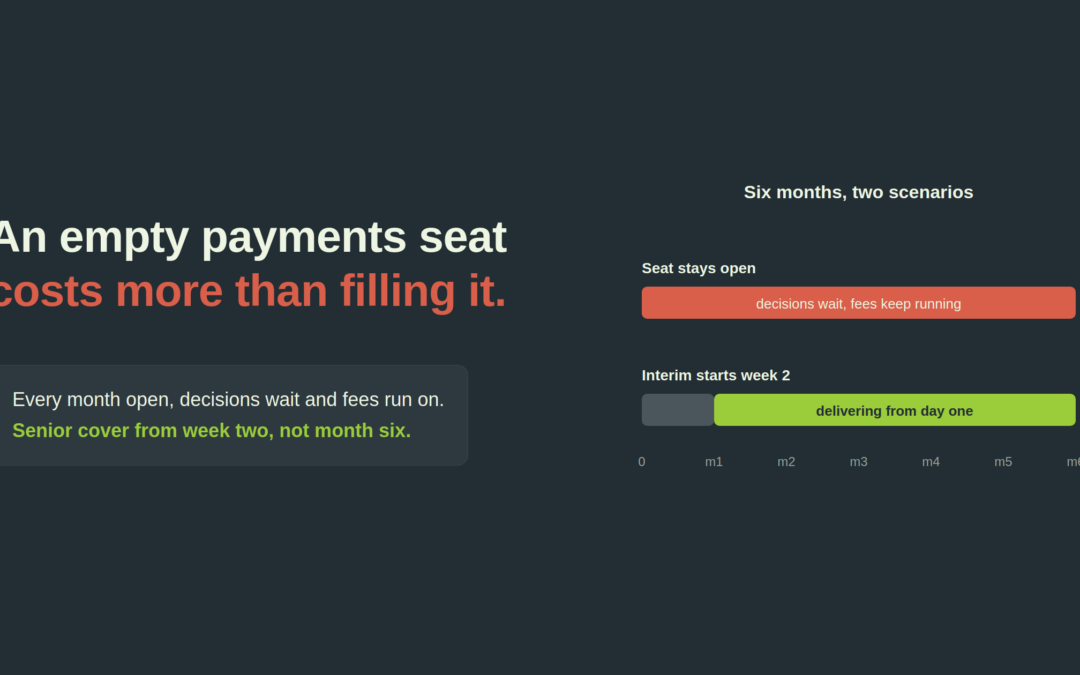
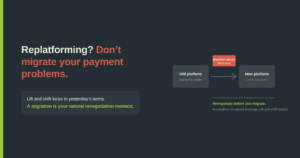
For companies going through replatforming, ownership change, or rapid market expansion, an interim specialist can carry the payments function while the permanent team is being hired or upskilled. This keeps commercial momentum without gaps in expertise.
The independence question
The value of any payment advisor depends entirely on whose interests they represent.
Advisors who also work for PSPs, whether on referral fees, implementation projects, or consulting retainers, have a structural conflict of interest when advising on PSP selection or cost negotiation. The advice they give is shaped, consciously or not, by those relationships.
EcomStream works exclusively for merchants. No PSP relationships, no revenue share with providers, no implementation revenue from providers. Every recommendation is made solely on the basis of what is right for the merchant.
That independence is not a marketing position. It is a structural feature of how EcomStream operates, and it is the reason the advice is commercially reliable.
When to bring in a specialist
The right moment is usually one of four situations. You have not reviewed your PSP contract in more than two years. Your volumes have grown significantly since the contract was signed. You are about to replatform or enter a new market. Or you have a sense that your payment costs are high but lack the internal knowledge to confirm it or act on it.
In all four cases, the cost of not acting is ongoing. Payment costs that are 20% higher than they need to be do not fix themselves.
EcomStream works on a no-cure-no-pay basis. There is no upfront fee and no fixed retainer. Fees are earned only on savings achieved or value delivered.
Talk to us about what we can find for you
EcomStream is an independent payment optimisation practice based in Zeist, the Netherlands. Every engagement is handled personally by Ramon Helwegen, with over 15 years in payments including 8 years on the PSP side.
One conversation is enough to know whether there is anything here
A thirty-minute Teams call, on your own figures. Nothing to prepare, the outline is enough.